http://www.nola.com/food/index.ssf/2013/08/hurricane_tips_food_advice_and.html#cmpid=nwsltrhead
Article below snipped in full from NOLA.COM link above by Judy Walker
Dear newcomers: Welcome to high hurricane season. Think of this as the price you pay to live in the land of inexpensive shrimp, Mardi Gras, brass bands and all of the other reasons you moved here.
Geographer Richard Campanella estimates a few thousand young urban rebuilding professionals moved here after 2005, and he estimates a second post-Katrina wave of another 15,000 to 20,000 -- and counting. So we have two populations: the untested and those who have lived through the nightmare of Katrina and other storms.
This year, we asked newcomers, what are your concerns? The material here is from our resident storm expert, personal experience, previous stories and interviews and the storm-hardened general population.
"Much of my life has been lived in areas threatened by hurricanes, so I thought I knew the drill," wrote reader Karen Montjoy of New Orleans in a series we published on storm advice.
"Have on hand batteries, flashlights, candles, Sterno, bottled water, canned soups and other nonperishable foods, a portable generator and gas for it, keep the car gassed up, fill tubs, sinks and other containers with water. But if the BIG ONE is headed your way, get out and get out early.
"For hurricane-prone areas like the Gulf Coast, this knowledge is all elementary. Katrina, however, added a post-graduate level to my education."
The key is having a plan. You need to make one now, along with a grab-and-go bag. At the very least, you need to write down things you will put in your grab-and go bag. When a storm is in the Gulf of Mexico, you may be too freaked out to think. Don't ask me how I know this.
The hardest thing about planning is that each storm is different, and may require a different response. You must prep for the wind event, but the aftermath is just as crucial. Some of the advice here will apply to your situation, and some will not.
Today we take a detailed look at food preparation and planning, and then we hear dozens of tips from experienced readers. Please do not despair over the length of this list, as it covers many eventualities.
First, we answer questions from followers of the NewinNola.com blog and Twitter feed. At meet-ups, the group has already discussed this topic.
The answers are from resident hurricane expert Mark Schleifstein of the Times-Picayune/NOLA.com.
NewinNola question: How do you decide whether to stay or evacuate?
Mark Schleifstein: A news conference of elected public officials will tell you if they are recommending or ordering an evacuation. Your best bet is to listen to them.
If you do evacuate, how far do you need to go?
MS: This will depend on where the hurricane makes landfall, and how large it is, and whether you are inside or outside the levee systems. You should decide now on a location far enough north to be out of the way of storm surge. Remember, if a major evacuation is ordered, the closest motels may be outside Louisiana.
What is 'contraflow'? I just heard this term.
MS: Contraflow is an evacuation plan to use all lanes of the Interstate in one direction. On the east side of New Orleans, all lanes will funnel all traffic east, and all traffic on the west side to go west. Interstate 55 will be one-way north.
If I evacuate, what do I need to do before I leave?
MS: Determine if you can turn off your electricity, natural gas and water. If you can, do so.
Is there anything I can do to prevent possible flooding of my home? Sand bags around the doors? Where do I get them?
MS: Again, this is location-dependent. In parishes outside the levee systems, sand bags may be available in advance of some storms. Inside the levee systems, it will be difficult to get sand bags, unless you make them yourself.
Do I need to board up my windows? If I'm in an apartment,is it my responsibility or my landlord's to do the hurricane prep?
MS: If you are able to board your windows, it can prevent damage from high winds. If you are in an apartment, you should check with your landlord. Now.
If I do stay, what do I need to have?
M.S.: If public officials tell you to leave, leave. If you don't have transportation, contact your local emergency preparedness office.
Does the water go out during a hurricane?
M.S. The water can go out if the power fails at your water treatment plant.
If not, is the water safe to drink?
M.S. Yes.
Will the toilets flush during a hurricane?
M.S. Until the water pressure disappears, yes.
Tips for getting in touch with people? Text, call or email?
M.S. Text messages will go through when phones won't ring. Also: Facebook instant messaging. (Sign up now.)
What about pets?
M.S. Make provisions now. However, at least in New Orleans, the emergency plan will include transport of cats and dogs to a shelter out of the area. Animals must have proper inocculations.
What about my older neighbor?
M.S. Folks who are elderly or have special needs should contact local emergency managers if they or their family are unable to make arrangements on their own. Those arrangements should be in place at the beginning of the hurricane season.
* *
Before we get into food preparation, here are my three top general tips.
One: Get a good manual can opener with big ergonomic handles. Do not get one of those old-fashioned little metal ones or a cheap metal one with handles. They suck. Lots of things will suck after the power goes out. Getting into the nonperishable food does not have to be one.
Two: During hurricane season, do not let the gas gauge in your car fall below half full, and if a storm is in the Gulf, top off your tank every day.
Three: If you don't own one, get a car charger for your cell phone now.
If you have to evacuate, you will need a full tank of gas, as gas stations may be closed for 150 miles or more. If you stay in town and the power is out, you can charge your cell phone in your car - and run the air conditioner in it, too.
FOOD AND WATER
Most emergency planners advise that you stock enough nonperishable food and water to last for two weeks per person. The Red Cross and FEMA say that every household should have a three-day supply of one gallon of water per person per day, plus more for any instant foods that require water for preparation (such as instant oatmeal, dry milk, soup mixes, etc.).
Don't just fill up your bathtub. Fill up clean liter-size soda bottles, trash cans, big bowls, ice bins and any other clean containers.
FOOD SHOPPING/STORAGE
This amazing note from Mojofearless was posted last hurricane season on a post about adding unusual foods to your food supply.
"Canned french butter - available at Hong Kong Market on the west bank. Vodka. Lychee juice to go with my vodka. Table top ice maker to chill my lychee juice and vodka (only have to run the ginny a few hours a day, and voila! Ice for the next 24 hours). Shelf stable milk - Parmalat, to be precise. French press coffee maker - no sense in having bad coffee during a disaster. Shelf stable bacon. Shelf stable cheese. Wasabi peas. Powdered falafal mix. Three gallons of homemade trail mix - with bing cherries, blueberries, pineapple, papaya, almonds - all sorts of fruit and nuts, plus mini M&Ms, because they don't make a mess when left in the heat.
"The list could go on for hours. We start gathering hurricane supplies in January, just one or two things every trip to the store. By season, we're pretty set to fed four for one month. And then when Voodoo Fest rolls around, we start eating/rotating the supplies, and we start all over again in January.
"It's a fine art."
For NOLA newbies, here are more basics besides lychee juice.
The Red Cross advises a three-day supply of nonperishable food per person in your household. The LSU AgCenter's list of nonperishables that require little or no cooking, and no refrigeration, includes single-serving cereal packages, crackers, granola bars, canned fruit, canned juice, packaged drink mixes, raisins, apple sauce, canned vegetables, canned soups or chili, tuna, canned chicken, beef jerky, peanut butter, canned milk or other shelf-stable milk, shelf-stable cheese, hard candy and chocolate.
Dorignac's has a lot of single-serving cereals.
Avoid salty foods, which will make you thirsty. Buy low sodium crackers.
You may not have any way to heat food or refrigerate it. Buy single-serve portions, when possible, to avoid leftovers.
*Select foods you like and normally eat. Don't waste money on food you or your family won't eat. But now may not be the time to be choosy. Pass the Pop-Tarts.
If you don't have a way to boil water when the power is off, do not include instant foods that will require hot water. Keep in mind foods that require water also will consume your water supply quickly.
Have disposable plates, bowls, cups and utensils, so you don't have to use much of your water supply washing dishes.
Remember baby food, special dietary requirements and food for your pets.
If the power goes out, several refrigerated items will still be good at room temperature: Catsup, mustards, jams, jellies, peanut butter, oils, butter; unopened salad dressing or other condiments; hard cheeses, barbecue, soy and Worcestershire sauces.
The healthiest emergency foods: beans, canned seafood, instant oatmeal, peanut butter and nut butters, powdered and boxed milk.
The most versatile canned vegetables: tomatoes, potatoes, corn, green beans, artichoke hearts, garbanzo beans, red bell peppers, asparagus.
Many vegetables and fruits last several days at room temperature: Apples, cabbage, potatoes, carrots (not the processed baby ones), peppers, melons and more. Lemons are priceless for perking up bland dishes and drinks. Onions and sweet potatoes are great for grill cooking.
Good and not on the usual lists: Cryovac-packed fish and meat, which is more expensive than canned, but great quality; canned coconut milk, shredded coconut; Boboli, pizza sauce in a squeeze bottle, summer sausage, dry salami, Parmesan cheese; instant rice; bulghur wheat to make tabouli, which does not require cooking. Those with adventurous palates (I'm looking at you, ex-Brooklynites) can check ethnic food stores for shelf-stable and small-size nonperishables. International Market in Metairie has a big variety of canned fish and meats.
Also good: low-salt broth; canned, chunk high-quality ham; Dijon and Creole mustard; real bacon bits to flavor bland dishes; instant pudding; dried fruits; unsalted nuts; tortillas and other bread; individual tea bags that don't require hot water; small jar of instant coffee plus creamer packets; small packets of condiments.
***Coffee: Starbucks Via packs are excellent and dissolve in anything. (Ignore the expiration dates.)
Try canned sardines now, if you haven't, to see if you like the strong flavor. Some of us prefer sardines over Spam or vienna sausages.
Parmesan cheese in the green can does not have to be refrigerated. Neither do whole, hard cheeses. However, they have a high salt level.
Soft cheeses (cottage cheese, brie, cream cheese, etc.) are very perishable and should be one of the first things you eat out of a failing refrigerator.
Herbs stirred into canned foods are a huge taste-brightener. Pick leafy herbs before the storm and keep fresh with the stems in a jar of water at room temperature.
Harvest any vegetable garden produce before bad weather; never eat or pick any vegetables touched by flood water.
***Foil is the emergency cook's duct tape. Have at least one roll of heavy-duty foil in your emergency cooking kit. Foil pans are good for cooking and baking on a grill.
Besides the foil, your excellent manual can opener, plastic cutlery and paper plates and bowls, an emergency cooking kit for home or on the road should include: a cast-iron skillet for cooking over a camp stove or on a grill; a pot for boiling water; waterproof matches; scissors or knife to cut open packages; gallon-size plastic zip-top bags; and a jar with a screw-top lid, to blend foods by shaking; paper towels. Dedicated cooks can add a cutting board and two knives, plus small containers of essentials such as oil, vinegar, mustard, seasonings, etc.
***If you have a grill, stock up on propane or charcoal before the storm. Communal grilling is a great non-power pastime, to use up freezer contents.
Other ways to heat food: Small, inexpensive portable grill plus charcoal; a camping cookstove plus fuel; or in a candle- or Sterno-fired fondue pot, chafing dish or candle warmer. Food can also be heated in a working indoor fireplace, but be sure to open the flue.
Boiling water: You can boil water on a grill in your cast-iron skillet or any heavy pot. An old pot is good. You can use everyday cookware on a grill, but it may discolor permanently.
If you evacuate to a motel, consider taking an electric skillet or other versatile small appliance, such as a rice cooker.
Tragedies to avoid: Under no circumstances should you try to use a charcoal or gas grill indoors. The same goes for generators. NEVER run a gasoline engine in, or near your garage or living/sleeping space. Sadly, carbon monoxide kills people in every disaster area.
Some people consider wine, beer and alcoholic beverages essential emergency foods. (Which would you enjoy at room temperature?) Beer may be useful for bartering.
Granola and baked goods can be made ahead of storms for evacuation or power-free dining and snacking.
A twenty-something we know swears by GoPicnic snack boxes, which she has found at Walgreen's as well as online.
COOLERS, FREEZERS, FRIDGE
Lots of locals limit food in their freezers during hurricane season. Start cooking meals now from the contents of your freezer, before storms come.
How long will things last in a refrigerator when the power goes out?
Anecdotally, the most common uses of generators are to run refrigerators and fans.
Highly perishable contents of your refrigerator will stay fresh for only four to six hours after the power goes out. This includes leftovers.
As a general rule, an unopened full freezer will keep food safe to eat for about 48 hours without power; a half-full one for 24 hours.
If freezer contents still have icy crystals inside them, they can be refrozen, although texture may be affected.
Several variables affect how long food will stay cool or frozen. Chest freezers may keep contents safe longer than upright ones. Also, the hotter the area where the appliance sits, the sooner the food inside will warm, too.
The American Red Cross suggests keeping an instant-read thermometer to check the temperatures of foods. Or test by feeling the package of food. The temperature you want is 40 degrees (refrigerator temperature) or below.
If food is refrigerator-cold or if it has been above that temperature for less than two hours, it probably is safe to use. In general, perishable food held above 40 degrees for more than two hours (at a picnic, on a buffet table or in a refrigerator without power) may be unsafe to eat, because bacteria can multiply rapidly between 40 and 140 degrees.
If you put 30 pounds of dry ice inside your refrigerator or freezer in anticipation of a power outage, your food should be safe inside for at least a couple of days, according to the LSU AgCenter's Food Safety After Power Outage publication, which is available online. (Dry ice should never be touched with bare hands; place it on cardboard or empty shelves in the freezer.)
If the power has been off for an extended period and food inside the freezer feels cool enough to be "refrigerator temperature," cook the most perishable food, seafood and ground meats, first, as soon as possible.
If you don't have a cooler, check outdoor stores for coolers that guarantee they will keep contents cold several days. Your cooler may be your best friend if evacuating or staying. You may want to spend the money and get a big one, or one that can be powered by your car battery.
Realize ice may be scarce, or nonexistent, if the power is out.
Open the freezer/refrigerator as seldom as possible.
If a hurricane is coming and you have large cuts of meat, cook them and slice to use as sandwiches for evacuation.
The food in your freezer will last longer if the freezer is full. If the freezer's not full, shove all the food in it close together. Fill any empty space with liters of water or water in freezer bags, which you can also use as ice in coolers. The bigger the piece of ice, the longer it will last, so consider freezing water in cleaned milk cartons.
***NO. 1 TIP MENTIONED BY READERS: Before you evacuate, put all food in the freezer inside black plastic garbage bags, then put it back in the freezer. If the power goes out, all you have to do to remove the thawed mess is throw out the bag.
At the very least, put ice pops or ice cream, in original packing, inside plastic bags closed with twist ties.
Place a clear plastic pitcher with whole ice cubes in it in the freezer. When you get back home, if the electricity is still off, throw away the food in the bag. If the electricity has gone off and come back on, you will be able to tell how much has defrosted by looking at the pitcher of ice. If it is a solid block of ice then you know that everything has defrosted. If the ice cubes were partially melted but many of them are still in the shape of ice cubes, you know it was not a total defrost job.
If you evacuate to friends or family, take the good seafood and meats with you to cook for your hosts.
TAKE WITH YOU LIST
Prepare a grab-and-go bag with: Medications, extra eyeglasses, contacts and prescriptions, prescription sunglasses, insurance papers, immunization records, Yellow and White pages, bank and credit union records, school records, health records.
Every evacuation handbag or backpack should carry a roll of toilet paper, wet wipes, hand sanitizer, gum or hard candy to help quench thirst, breath freshener for when you can't brush your teeth, painkillers of choice.
Survival list: Full gas cans, full propane tanks, camp stove fuel, and lamp oil with unsafe (strike anywhere) matches; batteries, flashlights, candles, Sterno, insect repellent.
SANITATION
Showering suggestions: Get baby wipes. Or look at drug stores in the adult-diaper section for the waterless washcloths home health-care aides use to bathe patients. These moist washcloths clean without water, and the moisture evaporates quickly without leaving a residue.
If you have a good supply of water, use a small amount (say, half a gallon) and use the old get-wet-soap-up-rinse-off drill while sitting in the tub. Use a plastic throw cup to pour water over yourself for wetting and rinsing.
Several readers have written about portable or camping toilets. An impromptu one: medium-sized lidded bucket or garbage can, tall plastic bags for liners and crumpled newspapers for absorbency -- plus toilet tissue.
PREPARING YOUR HOME
Container plants, outdoor furniture and outdoor decor may fly around during hurricanes. Move loose outdoor items into a sheltered space, such as a garage or indoors.
Roll up good rugs and move them, and furniture, to the second level of your home as much as possible. Alternately, elevate furniture on blocks, etc.
ABOUT YOUR CELL PHONE
Recharging your cell becomes a top priority when you are powerless. Last year after Hurricane Sandy, several tech sites published info on apps and ways to reduce the power drain on your phone so the battery lasts longer.
EVACUATION WITH CHILDREN: ADVICE FROM A MOM
Never try to evacuate without the portable DVD player. People who say parents shouldn't use TV as a babysitter never sat in a car for 14 hours in one spot on the interstate with screaming kids who have nothing to do. Ditch the plastic DVD boxes. Keep all the DVDs in a large book with a zip closure and handle -- no DVDs falling out in the car.
Give kids their own snack bags for when they get the hungry in the car. This gives them some independence. Also, sometimes they don't scream when they're eating. If they do, it muffles the sound.
Let them help before you go. Even if they're little. Even if it takes them three hours to find the one thing you sent them to get. Give them something "important" to do to help them feel in control.
Let them pack a few of their most precious things. What we think is important to them isn't always the most important. Asking them helps them feel a little more in control and helps them cope, and the less anxious they are, the less stressed you'll be.
Let kids pack their school backpacks full of what they want to do in the car (with supervision of course). That way, you don't have to look for their bag, they can recognize it right away and everything's not in one bag for all the kids.
Pack board games for later. Throw the board in the bottom of the suitcase, put the small pieces in a Ziploc bag and ditch the box. Pack a couple of decks of cards.
If your child is in special education, don't forget a copy of your child's last IEP and evaluation with your important papers and the Web site for the Special Education Reporting System with the State Department of Education to verify your child's eligibility for special education services (www.doe.state.la.us/lde/pair/1213.html). Your children are entitled to their education even without the paperwork, but it goes much smoother if you have it.
The tolerance typical kids have for riding in hot cars for long distances is cut by 50 percent or more for kids with disabilities. . . . Stop often, let them walk, move around and get out of the car.
And, once you're there, turn off the news and play a board game with the kids. You'll feel a lot better.
PETS
Plan for a week of pet food, medication, etc., and have cages and carriers.
Test your animals on tranquillizers before the big event...learned the hard way that the meds made my 90-pound dogs rather surly.
One thing that worked well during Katrina was a "Travel Litter Box" for our cat. I bought a large plastic bin with a very tight cover. With the cover on, we had a "ready-in-an-instant" litter box in case our trip to safety took, oh, say, 12 hours or more in bumper-to-bumper traffic. The litter box can be quickly sealed back up after use with all its contents.
SPECIAL TRICKS TO KNOW
Fill a water bottle half way and freeze it standing up. Then lay in down in your freezer. If it melts during a power outage and refreezes, throw out the freezer contents.
If you have fruits, yogurt, milk in the fridge, blend all of it to make a smoothie to reduce the volume of foodstuffs in your fridge, then fill several twist-lid storage containers with it. Fill each about 80 percent to allow for expansion. Stack them in the freezer, wait a day, and you have a block of smoothie that you can use as ice in a cooler, and you can drink as it melts.
Have a push-button, land-line telephone for hurricanes. Land-line service is usually restored quicker than cell phone service.
In evacuation, bring the CPU of your home computer, or a flash drive with your backed up files.
Check your tires. And the spare. NOW.
If you run a business in the city, take your occupational license with you when evacuating. It could help you get back in the city.
Have an emergency account set up with a national bank so when you cannot access money from your local bank, there is a back-up fund.
Tell your family and friends where you are going and work out a "contact person" on the outside, who can give your information to worried friends and family
If you still have a landline and a non-electronic answering machine lying around, plug it in before you evacuate. If it comes on when you call, your power is on.
Get neighbors' contact information, so you can get updates from each other.
Take photographs of everything in your house in case you have to file an insurance claim.
Don't forget to take your blank checks with you. We had our checkbooks but didn't think about all the extra checks. We had to call and cancel them. It's a good thing we did: Returning home we discovered minor storm damage but major looting .
I was in such a state of shock following Katrina that my memory was impaired. I could not remember all the different Internet log-ons and passwords that I use to access my credit cards, bank account and investments. Now I have these written down by code in my pocket telephone directory. I believe the code would prevent a thief from knowing what I've written should the directory be found. You may want to develop your own security system for protecting this info. The point is to have some safe place for referral.
NEVER leave a car behind even if you don't want to be separated from family. The car is what you need the most!
HANDY THINGS TO HAVE
***You will be so happy if you have a flashlight mounted on a headband.
Reader suggestions on other evacuation things to bring: Pillow, a sweater, Xanax, most important jewelry, good bottles of wine saved for a special occasion, inflatable mattress, bedding.
A weather radio that operates on batteries that can be recharged by cranking a handle. Some units have TV/radio/flashlight that operates the same way.
Buy a good pair of walkie-talkies with 5-mile range for the road to communicate between family cars. Cell phones are worthless when a storm approaches
We brought the solar powered garden lights inside and used them as "candles." We would put one in each room inside of an empty 2-liter bottle and they lasted for hours. They especially came in handy for the bathroom! There was no need for batteries and no risk of children burning themselves. You just have to remember to place them outside the next day so they can recharge.
You know how people always say they have a credit card "just for emergencies"? I had gotten a gas credit card a few months before Katrina for that purpose and it turned out to be a life saver.
After spending years in Africa, I wasn't caught off-guard by the aftermath of Katrina. (I stayed.) Some things that helped: a small battery-powered fan, a screen-covered rain barrel for extra wash water, blocks of ice made in plastic containers and, for the time when sewers weren't working, a bag of cat litter to go with the plastic bags.
Go NOW to buy a long-distance calling card -- my cell phone was as useful as a brick when trying to make a call after Katrina, and having the card eliminates your host's landline being charged for your calls. Get one with lots of minutes on it as you will be on hold for most business calls should the worst happen again.
Get a Louisiana state map and a Mississippi state map. Paper ones. The state roads are in decent condition and you can make stops. Stay off the interstate.
Thursday, August 29, 2013


Wednesday, August 28, 2013
DO YOU WANT TO WORK IN THE MOVIES?
The Mayor’s Office of Cultural Economy announced a series of film industry trainings in partnership with Film New Orleans, the New Orleans Video Access Center (NOVAC) and the St. Bernard Parish Office of Film & Television.
Starting in September, as part of NOVAC’s Ready Set Film! workforce program, three low-cost film industry trainings will be provided to aspiring production assistants, assistant directors and production accountants to work on feature film and television productions. The Ready Set Film! fall series will train 54 local residents through classes led by practicing professionals and will also offer job placement support to participants.
“We are pleased to continue our series of film industry training programs and once again to be partnering with NOVAC and St. Bernard Parish,” said Scott Hutcheson, advisor to Mayor Landrieu for Cultural Economy. “These programs will help to deliver a highly skilled regional workforce which is necessary to support the continued growth of the film industry in the area.”
Trainings will include:
Production Accounting Intensive – On Saturday, September 14, 2013 from 10 a.m. – 4 p.m. at NOVAC’s training facility, Melissa Wiseman of Entertainment Partners Financial Solutions will lead exercises in Movie Magic Budgeting, the standard production accounting software for feature films. She will also cover cost reporting, labor laws, tax credits and more. This training is open to ten Louisiana residents on a first come, first serve basis at the rate of $50 for Orleans Parish NOVAC members, $100 for non-Orleans Parish NOVAC members and $155 for new members. Candidates can visit novacvideo.org/productionaccounting to learn more and register for the course.
Assistant Directing Intensive – On Sunday, September 15 from 10 a.m. – 4 p.m. at NOVAC’s training facility, AD Jared Hopkins will lead exercises in Movie Magic Scheduling, the preferred scheduling software for film professionals. He will also cover script breakdowns, production boards, set management and more. This training is open to ten Louisiana residents on a first come, first serve basis at the rate of $50 for Orleans Parish NOVAC members, $100 for non-Orleans Parish NOVAC members and $155 for new members. Candidates can visit novacvideo.org/adintensive to learn more and register for the course.
P.A. Bootcamp – On Saturday, September 28 and Sunday, September 29 from 9 a.m. – 5 p.m. at the Contemporary Arts Center, NOVAC will offer a two-day production assistant training led by Quixote’s renowned P.A. Bootcamp training academy. This training is open to 30 Orleans Parish residents and four St. Bernard Parish residents on a competitive basis. Candidates should visit novacvideo.org/pabootcamp to download an application and submit it with a résumé to workforce@novacvideo.org by Saturday, September 7. There is a $75 acceptance fee.
Film New Orleans assists productions with the City’s permitting process, connects productions with local crews and resources, and facilitates communication between productions and the local community.
For questions about filming in New Orleans, please contact Film New Orleans at (504) 658-0923 begin_of_the_skype_highlighting (504) 658-0923 FREE end_of_the_skype_highlighting or visit http://www.nola.gov/film.
Starting in September, as part of NOVAC’s Ready Set Film! workforce program, three low-cost film industry trainings will be provided to aspiring production assistants, assistant directors and production accountants to work on feature film and television productions. The Ready Set Film! fall series will train 54 local residents through classes led by practicing professionals and will also offer job placement support to participants.
“We are pleased to continue our series of film industry training programs and once again to be partnering with NOVAC and St. Bernard Parish,” said Scott Hutcheson, advisor to Mayor Landrieu for Cultural Economy. “These programs will help to deliver a highly skilled regional workforce which is necessary to support the continued growth of the film industry in the area.”
Trainings will include:
Production Accounting Intensive – On Saturday, September 14, 2013 from 10 a.m. – 4 p.m. at NOVAC’s training facility, Melissa Wiseman of Entertainment Partners Financial Solutions will lead exercises in Movie Magic Budgeting, the standard production accounting software for feature films. She will also cover cost reporting, labor laws, tax credits and more. This training is open to ten Louisiana residents on a first come, first serve basis at the rate of $50 for Orleans Parish NOVAC members, $100 for non-Orleans Parish NOVAC members and $155 for new members. Candidates can visit novacvideo.org/productionaccounting to learn more and register for the course.
Assistant Directing Intensive – On Sunday, September 15 from 10 a.m. – 4 p.m. at NOVAC’s training facility, AD Jared Hopkins will lead exercises in Movie Magic Scheduling, the preferred scheduling software for film professionals. He will also cover script breakdowns, production boards, set management and more. This training is open to ten Louisiana residents on a first come, first serve basis at the rate of $50 for Orleans Parish NOVAC members, $100 for non-Orleans Parish NOVAC members and $155 for new members. Candidates can visit novacvideo.org/adintensive to learn more and register for the course.
P.A. Bootcamp – On Saturday, September 28 and Sunday, September 29 from 9 a.m. – 5 p.m. at the Contemporary Arts Center, NOVAC will offer a two-day production assistant training led by Quixote’s renowned P.A. Bootcamp training academy. This training is open to 30 Orleans Parish residents and four St. Bernard Parish residents on a competitive basis. Candidates should visit novacvideo.org/pabootcamp to download an application and submit it with a résumé to workforce@novacvideo.org by Saturday, September 7. There is a $75 acceptance fee.
Film New Orleans assists productions with the City’s permitting process, connects productions with local crews and resources, and facilitates communication between productions and the local community.
For questions about filming in New Orleans, please contact Film New Orleans at (504) 658-0923 begin_of_the_skype_highlighting
(504) 658-0923 FREE end_of_the_skype_highlighting or visit http://www.nola.gov/film.Sunday, August 25, 2013
Historic Homes... quality construction
Great article on the value of purchasing an older home... they are built to withstand what Mother Nature throws at them... much higher quality than what is built with today's material.....
Because the house was .... raised up on brick piers, the surge water hadn’t made it to the high plastered ceilings but had filled the house up with several feet of sea water before finding its way back out through doors and wall openings. Studying the hand-planed, tall single-board trim around the floors and the water mill-sawn framing, it was clear the structure had been built in the very early 19th century. Katrina was clearly not its first hurricane rodeo.
the reality became clear that the best insurance they had was how they were built. The lime-based plaster walls with cypress lathe held up totally intact after an extended period submerged in flood water, compared to homes that had been re-muddled with modern drywall and were covered with wide bands of black mold. The quarter-sawn heart-pine floors were still pristine under a layer of mud, while the modern replacement floor systems were swollen and buckled beyond salvage. The reality that the older homes were built for disasters, decades prior to the introduction of homeowners; insurance in the 1950s, was becoming glaringly obvious. How quickly we forget how and why we should build to withstand the forces of nature. In today’s world, images of neighborhoods demolished by natural disasters are commonplace, but how many people realize that the real reason we see higher and higher damage estimates has largely to do with how substandard so much of what we build today is when subjected to the powerful forces of nature? In truth, building codes were created for the most part to protect mortgage and insurance companies, but why is the bar set so low? As my builder friend John Abrams once said, “When someone says that everything they build meets code, what they are really saying is that if they built it any worse, it would be illegal.”
Because the house was .... raised up on brick piers, the surge water hadn’t made it to the high plastered ceilings but had filled the house up with several feet of sea water before finding its way back out through doors and wall openings. Studying the hand-planed, tall single-board trim around the floors and the water mill-sawn framing, it was clear the structure had been built in the very early 19th century. Katrina was clearly not its first hurricane rodeo.
the reality became clear that the best insurance they had was how they were built. The lime-based plaster walls with cypress lathe held up totally intact after an extended period submerged in flood water, compared to homes that had been re-muddled with modern drywall and were covered with wide bands of black mold. The quarter-sawn heart-pine floors were still pristine under a layer of mud, while the modern replacement floor systems were swollen and buckled beyond salvage. The reality that the older homes were built for disasters, decades prior to the introduction of homeowners; insurance in the 1950s, was becoming glaringly obvious. How quickly we forget how and why we should build to withstand the forces of nature. In today’s world, images of neighborhoods demolished by natural disasters are commonplace, but how many people realize that the real reason we see higher and higher damage estimates has largely to do with how substandard so much of what we build today is when subjected to the powerful forces of nature? In truth, building codes were created for the most part to protect mortgage and insurance companies, but why is the bar set so low? As my builder friend John Abrams once said, “When someone says that everything they build meets code, what they are really saying is that if they built it any worse, it would be illegal.”
8429 APPLE ST
Joliet Street corner Apple Street, square 377, lot C
sold by Cameron Landry to Caleb D. Ford
for $175,000
This property is right next to the Ashton Theatre.

sold by Cameron Landry to Caleb D. Ford
for $175,000
This property is right next to the Ashton Theatre.
Saturday, August 24, 2013
Monday, August 19, 2013
Racial Dot Map
Take a look at the Racial Dot Map : http://demographics.coopercenter.org/DotMap/index.html
Here's the Legend:
Here's it zoomed in as far as it will go on the NorthWest Carrollton Area.

Note:
The cluster of red dots at the Notre Dame Seminary
The blank area of Palmer Park and Walgreens/Roberts and Harrell Park
Here's a broader city view......

Here's the Legend:
Here's it zoomed in as far as it will go on the NorthWest Carrollton Area.
Note:
The cluster of red dots at the Notre Dame Seminary
The blank area of Palmer Park and Walgreens/Roberts and Harrell Park
Here's a broader city view......
Sunday, August 18, 2013
Night-Out Against Crime Planning Meeting
The City’s Night-Out Against Crime is likely going to be Tuesday October 8, 2013.
We will meet at 6: 30PM on Monday August 19, 2013 at Central St. Matthew United Church of Christ – 1333 South Claiborne Avenue (corner of Willow and Carrollton)
The meeting is the initial planning meeting for Night-Out Against Crime event.
Your presence and active participation is welcome.
Your presence and active participation is welcome.
Saturday, August 17, 2013
Flood Maps: Katrina and "today".
Read the whole article on Nola.com
The Katrina Flooding is accurately portrayed.

So here's hoping this graphic is accurate too....
 http://www.nola.com/hurricane/index.ssf/2013/08/upgrated_metro_new_orleans_lev.html#incart_special-report
The Katrina Flooding is accurately portrayed.
So here's hoping this graphic is accurate too....
http://www.nola.com/hurricane/index.ssf/2013/08/upgrated_metro_new_orleans_lev.html#incart_special-report
Friday, August 16, 2013
How to build community
The price of apathy is to be ruled by evil men. Plato
So if something isn't "right" speak up!
Send us an email at nwcarrollton@mindspring.com
So if something isn't "right" speak up!
Send us an email at nwcarrollton@mindspring.com
Wednesday, August 14, 2013
New Orleans 8 years later... still has potential
Check out the link..
"New Orleans area median household income dropped 8 percent from 1999 to 2011, to $44,404. But the United States as a whole fared worse, dropping 11 percent. The national median income was $50,502, still higher than New Orleans but with a narrowing gap."
"Entrepreneurship rates in the New Orleans area sustained a growth pattern that started after Katrina and before the recession, beating national results and the model cities, with 501 of every 100,000 adults starting businesses in the three-year period ending with 2012."
"Although the minority population dropped after Katrina, the share of all businesses with minority owners rose, reaching 27 percent, which topped the national 21 percent, but receipts to minority-owned businesses were stagnant, indicating small enterprises that might be struggling to grow, Plyer said."
"It's also unusual, she said, for longtime fading cities to achieve such a turnaround.
"Katrina caused a break in the status quo," she said, with a flurry of public policy reforms and economic development opportunities."
New Orleanians have an odd and wonderful way of finding the silver lining.
"New Orleans area median household income dropped 8 percent from 1999 to 2011, to $44,404. But the United States as a whole fared worse, dropping 11 percent. The national median income was $50,502, still higher than New Orleans but with a narrowing gap."
"Entrepreneurship rates in the New Orleans area sustained a growth pattern that started after Katrina and before the recession, beating national results and the model cities, with 501 of every 100,000 adults starting businesses in the three-year period ending with 2012."
"Although the minority population dropped after Katrina, the share of all businesses with minority owners rose, reaching 27 percent, which topped the national 21 percent, but receipts to minority-owned businesses were stagnant, indicating small enterprises that might be struggling to grow, Plyer said."
"It's also unusual, she said, for longtime fading cities to achieve such a turnaround.
"Katrina caused a break in the status quo," she said, with a flurry of public policy reforms and economic development opportunities."
New Orleanians have an odd and wonderful way of finding the silver lining.
Saturday, August 10, 2013
8330, 8330 1/2, 8332 & 8332 1/2 Pritchard Place
Sonia Maret Kenwood to Clifford M. Kenwood and Edward B. Kenwood, no value stated, donation.
Clifford M. Kenwood to Edward Kenwood for $175,000
Clifford M. Kenwood to Edward Kenwood for $175,000
Friday, August 9, 2013


Tuesday, August 6, 2013
Expensive Security Districts...
Click on the link to see a map of the 28 Security Districts of Orleans Parish.
Total annual cost to taxpayers: $7,500,000!
We're still glad that NorthWest Carrollton stuck with Neighborhood Watch and communication with out Quality of Life Officer and NOPD.
With thanks to Tim Garret for bring this to our attention.
Total annual cost to taxpayers: $7,500,000!
We're still glad that NorthWest Carrollton stuck with Neighborhood Watch and communication with out Quality of Life Officer and NOPD.
With thanks to Tim Garret for bring this to our attention.
Sunday, August 4, 2013
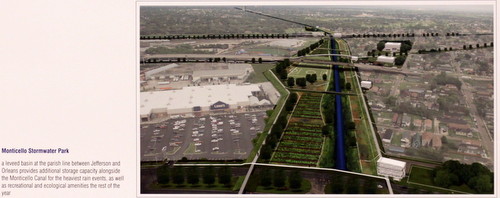
Monticello Canal .... options.... but no dollars
Read the whole article at Uptown Messenger:
"Rainfall should be diverted out of Uptown via the Mississippi River instead of carrying it all the way to Lake Pontchartrain, and major drainage ditches like the Monticello Canal should be expanded into interior floodplains and water-storage features, according to two recommendations that illustrate how New Orleans should be better managing its water instead of just pumping it away."
Saturday, August 3, 2013
Friday, August 2, 2013
Costco Grand Opening September 21st @ 7AM
You can sign up for your Costco Membership
Monday – Friday
at the Xavier Police Station parking lot on Carrollton
where Costco Reps are available to assist.
Or you can sign up online at www.costco.com .
Monday – Friday
at the Xavier Police Station parking lot on Carrollton
where Costco Reps are available to assist.
Or you can sign up online at www.costco.com .
Thursday, August 1, 2013
New Orleans - Aspirational City - Brain Gain
http://www.newgeography.com/content/003852-aspirational-cities-us-cities-that-offer-both-jobs-and-culture-are-mostly-southern-and-modest-sized
"Both No. 1, Austin, Texas, and No. 2, New Orleans, are places where people can enjoy the cultural amenities and attitudes of “progressive” blue states but in a distinctly red-state environment of low costs, less regulation, and lower taxes. These places have lured companies and people from more expensive regions, notably California and the Northeast, by being not only culturally rich but also amenable to building a career, buying a home and, ultimately, raising a family in relative comfort."
"No big economic region outperforms Houston, a metropolitan area of more than 5 million people that boasts arguably the strongest big-city economy in the nation. Not only the global hub of the energy industry, it also boasts the nation’s largest medical center and has dethroned New York City as the nation’s leading export center. Other strong performers include No. 7, Salt Lake City; No. 8, Oklahoma City; and No. 11, New Orleans, all of which have enjoyed strong job growth over the past five years."
"Our methodology concentrates on three metrics: domestic migration, growth of foreign-born population; and growth in the number of college-educated people. These groups reflect what may be thought of as “the canaries in the coal mine”—indicators of where people seeking a better life are choosing to settle. This factor seems to jibe with our overall rankings more than any other component."

"In thinking about the future, then, it is important to recall that not long ago some of the cities near the top of today’s aspirational list were facing seemingly irreversible economic decline, demographic stagnation, and even loss and deterioration of basic infrastructure." <<<< No one knows this more than a New Orleanian (especially a PreKatrina New Orleanian).
"Both No. 1, Austin, Texas, and No. 2, New Orleans, are places where people can enjoy the cultural amenities and attitudes of “progressive” blue states but in a distinctly red-state environment of low costs, less regulation, and lower taxes. These places have lured companies and people from more expensive regions, notably California and the Northeast, by being not only culturally rich but also amenable to building a career, buying a home and, ultimately, raising a family in relative comfort."
"No big economic region outperforms Houston, a metropolitan area of more than 5 million people that boasts arguably the strongest big-city economy in the nation. Not only the global hub of the energy industry, it also boasts the nation’s largest medical center and has dethroned New York City as the nation’s leading export center. Other strong performers include No. 7, Salt Lake City; No. 8, Oklahoma City; and No. 11, New Orleans, all of which have enjoyed strong job growth over the past five years."
"Our methodology concentrates on three metrics: domestic migration, growth of foreign-born population; and growth in the number of college-educated people. These groups reflect what may be thought of as “the canaries in the coal mine”—indicators of where people seeking a better life are choosing to settle. This factor seems to jibe with our overall rankings more than any other component."
"In thinking about the future, then, it is important to recall that not long ago some of the cities near the top of today’s aspirational list were facing seemingly irreversible economic decline, demographic stagnation, and even loss and deterioration of basic infrastructure." <<<< No one knows this more than a New Orleanian (especially a PreKatrina New Orleanian).
Entergy .... small reduction in costs
http://www.nola.com/business/index.ssf/2013/08/entergy_new_orleans_customers_2.html
As reported on Nola.com by Bruce Eggler...
Entergy customers on the east bank of Orleans Parish can look forward to slight reductions in their electricity bills in coming months, a New Orleans City Council committee was told Thursday afternoon.
Entergy New Orleans officials and the council's legal and technical advisers on regulating the company agreed last week on a "formula rate plan" settlement that will reduce base electricity rates by 2.5 percent, retroactive to October 2012. That amounts to $6.5 million, the council's Utility Committee was told. Gas rates will not change.
Because the change applies only to the base rate, not to fuel adjustment charges, customers' monthly bills will drop by less than 2.5 percent. Technical adviser Joe Vumbaco told the committee that a typical residential customer's bill will fall by 1.55 percent, from $104.63 to $103.01 a month. Commercial customers' bills will be reduced by about 1.64 percent and industrial customers' bills by 1.39 percent.
Vumbaco said $3.8 million will be refunded to electricity customers through bill credits over four months, September to December, to make up for overcharges since October 2012.
The changes do not affect Entergy Louisiana customers in Algiers.
Entergy had put higher rates into effect in October totaling about $1 million for electricity customers and another $1 million for natural gas customers, even though the council advisers' review of the company's books for 2011 suggested that decreases of more than $10 million were called for. Under a 2009 agreement, customers' electricity and gas rates are adjusted annually to the midpoint of approved ranges of rates of returns on the company's equity.
After months of legal proceedings, the two sides decided that a $6.5 million reduction in electricity revenues was in order, meaning that the entire electricity rate increase put into effect in October will be refunded with interest, in addition to a lower base rate going forward.
The Utility Committee endorsed the settlement Thursday, and the full council is expected to follow suit next week.
Clint Vince, the council's chief legal adviser on regulating Entergy, said the 2012 rate settlement is the fifth consecutive year in which action by the council and its advisers has resulted in rate reductions. Cumulatively, the reductions have saved Entergy New Orleans customers $215.5 million since 2009, he said.
Councilwoman Susan Guidry called the latest agreement "totally amazing," and Forest Bradley-Wright of the Alliance for Affordable Energy said it was "incredibly wonderful."
Real Estate
Tuesday, July 30, 2013
Sellers Market? NorthWest Carrollton still had deals

http://www.nola.com/business/index.ssf/2013/07/game_of_homes_real_estate_fren.html
"The real estate market across the New Orleans area has strengthened over the past year or so, with an uptick in sales and prices region-wide. Buyers around the city are reporting that it's difficult to find a home in the right price range, the right location, and right condition."
"In June, there were 132 single-family houses for sale in the neighborhoods of the Garden District, Uptown and Carrollton, which amounted to a two-month supply, according to statistics from the New Orleans Metropolitan Association of Realtors' Multiple Listing Service.
Months of supply means the time it would take for all houses on the market to be sold at the current sales pace. Those figures include houses at all prices and state of repair.
In general, a six-month supply of housing is considered to be a balanced market. Any more, it's a buyers' market. Much less and it's a sellers' market.
By comparison, in late 2008 and early 2009, as the housing crisis rippled through the national economy, months of supply in those neighborhoods hovered between 10 months and two years before beginning a long decline."
Sunday, July 28, 2013
Water Leak in the 8200 Block of Apple Street
You stand in the street and HEAR the water rushing under your feet!!!!


http://nwcarrollton.blogspot.com/2009/02/s-apple-street-update.html
http://nwcarrollton.blogspot.com/2009/02/s-apple-street-update.html
Parking Problem - Part 1 - Sidewalks and Greenspace
Please see the photos of consistent illegal and destructive parking that blocks the sidewalk and/or tears up the greenspace between the sidewalk and the street.
8100 Block of Pritchard Place, just off Carrollton


8300 Block of Pritchard Place @ Cambronne


8400 Block of Pritchard Place & Joliet


Apple @ Joliet
Another corner where vehicles are consistently parked on the sidewalk


We're assuming these are the rules.

Apple @ Dante
 2
2
900 Block of Joliet

Leonidas @ Belfast


Look carefully in the shadow of the house.

This truck parked here so often it is on the Assessor's Map Image.
Leonidas between Fig & Pritchard

Van parks here so often it is on the Assessor's Map.


8100 Block of Pritchard Place, just off Carrollton
8300 Block of Pritchard Place @ Cambronne
8400 Block of Pritchard Place & Joliet
Apple @ Joliet
Another corner where vehicles are consistently parked on the sidewalk
We're assuming these are the rules.
Apple @ Dante
2900 Block of Joliet
Leonidas @ Belfast
Look carefully in the shadow of the house.
This truck parked here so often it is on the Assessor's Map Image.
Leonidas between Fig & Pritchard
Van parks here so often it is on the Assessor's Map.
Sunday, July 14, 2013
Small Red Female Dachshund missing from Dante between Apricot and Pritchard
HERSHEY is BACK where she belongs!!!!!!
If found or seen please contact Mary LaCaze >>> 504 -450-5780
Dachshund's name is Hershey. She is smaller than most full grown Dachshunds.
She is visiting in NorthWest Carrollton while her owner is out of town and she got out of the yard.
Friday, July 12, 2013
8141 Apple
8141 Apple sold
by Department of Housing and Urban Development
to Maddison Jude Bruno for $57,333.
by Department of Housing and Urban Development
to Maddison Jude Bruno for $57,333.
Sunday, July 7, 2013

Friday, July 5, 2013

Wednesday, July 3, 2013
Take a look at the map....

All reported robberies around Uptown New Orleans in 2013. (map via NOPD)
AND then CLICK ON THE LINK to read the article in Uptown Messenger.
Tuesday, July 2, 2013
Dark Skies - Understanding Lighting - Preservation in Print
See full article online at PRCNO Preservation in Print
Clips and quotes are below
...100 Watt metal halide lamps produce too much glare and are over-scaled for the poorly designed reflector....
Light emitting diodes (LEDs) are the answer.
Basically building owners have been trying to light the street for safety but instead have been creating glare.
Clips and quotes are below
...100 Watt metal halide lamps produce too much glare and are over-scaled for the poorly designed reflector....
Light emitting diodes (LEDs) are the answer.
Basically building owners have been trying to light the street for safety but instead have been creating glare.
Saturday, June 29, 2013
Live Oak Canopy Endangered
We said this since Katrina and lobbied for assurances that any Oak lost along Carrollton be replaced with another oak. But now the Louisiana Landmark Society also says that the city's Live Oak Canopy is endangered.
http://www.nola.com/politics/index.ssf/2013/06/former_wtc_building_algiers_fe.html
"Citywide live oak canopy
The sight of shaded streets lined with live oak trees is emblematic of New Orleans. But from the destruction of the longest line of live oaks in the nation for the construction of the elevated Claiborne expressway in the 1960s to drastic trimming for power lines, the city's live oak trees are frequently butchered or removed for public works projects. A recent example was the branch mutilation and root damage suffered by trees on Napoleon Avenue in 2012 during a drainage project. "It will be decades before the trees recover, and we will lose much of the scenic character of the city in the process," the society said. "
http://www.nola.com/politics/index.ssf/2013/06/former_wtc_building_algiers_fe.html
"Citywide live oak canopy
The sight of shaded streets lined with live oak trees is emblematic of New Orleans. But from the destruction of the longest line of live oaks in the nation for the construction of the elevated Claiborne expressway in the 1960s to drastic trimming for power lines, the city's live oak trees are frequently butchered or removed for public works projects. A recent example was the branch mutilation and root damage suffered by trees on Napoleon Avenue in 2012 during a drainage project. "It will be decades before the trees recover, and we will lose much of the scenic character of the city in the process," the society said. "
Friday, June 28, 2013
Costco construction to the left of us, SELA to the right
NorthWest Carrollton is centrally located... and that's good.
But the Construction at Carrollton and Palmetto to improve the streetscape....
is going to be fun for the next few months. Thank goodness they waited until school was out before kicking it up a notch. Check out Uptown Messenger for details.
http://uptownmessenger.com/2013/05/south-carrollton-lane-closures-construction-schedule-announced-for-streetscape-project-around-costco-site/
And then there is the ongoing construction on Claiborne for the SELA drainage project that will bring more water to the Monticello Canal.
And the construction on Broadway........
Be careful out there folks.
But the Construction at Carrollton and Palmetto to improve the streetscape....
is going to be fun for the next few months. Thank goodness they waited until school was out before kicking it up a notch. Check out Uptown Messenger for details.
http://uptownmessenger.com/2013/05/south-carrollton-lane-closures-construction-schedule-announced-for-streetscape-project-around-costco-site/
And then there is the ongoing construction on Claiborne for the SELA drainage project that will bring more water to the Monticello Canal.
And the construction on Broadway........
Be careful out there folks.
Thursday, June 27, 2013
Evacuteer looking for volunteers to staff Palmer Park
Dear Northwest Carrollton Neighborhood Association,
I work for evacuteer.org, a non-profit agency that aids and enhances the City Assisted Evacuation (CAE) – a free, citywide public evacuation option that was one of the major improvements in the post-Hurricane Katrina recovery of New Orleans. The CAE can accommodate the over 30,000 residents who lack the ability to evacuate in the event of a mandatory evacuation.
Evacuteer.org has proposed a collaborative effort between the Arts Council of New Orleans and the Office of Homeland Security and Emergency Preparedness to commission 17 public art pieces, called EvacuSpots, to serve as visually-striking and memorable rallying points in case of an evacuation of New Orleans. These 14-foot tall EvacuSpots are currently being installed in your neighborhoods for your neighbors. It is our hope for community leaders and organizations, like yours, to embrace these EvacuSpots as your own. You know your neighbors better than we do and thus know how best to help them during an evacuation.
We would like to set up a meeting with you to discuss how your organization can join evacuteer.org as a partner group in keeping all of our neighbors safe and prepared for an emergency. Becoming a partner is simple; we bring the 1.5 hour training to your facility at a time that is convenient and provide refreshments. Once trained, your team is prepared to lead and assist at Palmer Park EvacuSpot. We look forward to working with you to help keep our neighborhoods ready for this Hurricane Season.
Sincerely,
Meredith Cherney
Meredith@evacuteer.org
Community Outreach Specialist
Please feel free to contact Meredith directly
Wednesday, June 26, 2013
Carjacking 8400 Block of Fig - Arrest Made!
FOR IMMEDIATE RELEASE
06/26/2013 |
NOPD Arrests 15-Year-Old Gunman in Uptown Armed Robbery
Second District officers arrested a 15-year-old gunman yesterday who admitted to pointing a gun at a woman’s head last week and then taking off in her car.
The incident happened last Wednesday just before 7pm in the 8400-block of Fig Street. The victim said she was about to get into her car when a teenager approached her, put a gun to her head and said, “Give me the keys. Don’t scream, or I’ll shoot you.” The gunman then left in the victim’s 2008 Saturn.
Two days later, the Saturn was spotted at Iberville and North Lopez Streets. Four males who were in the car fled the car at the sight of police. The car was then recovered.
Yesterday, detectives went to the corner of Fig and Cambronne Streets to follow up on a call of a suspicious person. The description of the person was similar to that of the teenager who had stolen the Saturn a week earlier. Detectives canvassed the neighborhood, describing the suspect to residents in hopes they may have seen him. Various residents told investigators they were familiar with the suspect, and were able to tell detectives where he might live. The information led detectives to the 15-year-old’s home, which was in the near vicinity. Detectives took the teen to the juvenile Bureau for questioning, and in a statement, he admitted to committing the armed robbery, and was subsequently booked with Relative to Firearm Use in a Robbery.
“Great work by our Second District team in this case. Our detectives were thorough, and left no stone unturned when trying to locate this teenager wielding a gun”, said Superintendent Ronal Serpas.
“And this is another case where residents were forthcoming with our officers to tell them what they knew, because they recognize the NOPD’s ability to track down violent criminals and make our neighborhoods safer. As always, we’re incredibly grateful for the community’s help.”
# # #
|
FOR IMMEDIATE RELEASE
06/20/2013 |
On June 19, 2013 at approximately 6:55 p.m., a Carjacking occurred in the 8400 block of Fig Street.
The victim stated she exited her residence and walked toward her vehicle which was parked on the shoulder of the road in front the side door of her residence. As she opened the driver door an unknown black male who was armed with an unknown black semi-automatic handgun placed the gun to the temple of her head and stated "Give me the keys, don't scream or I'll shoot you". The victim relinquished the car keys and the perpetrator drove off west on Fig Street then unknown.
The victim described the perpetrator as a black male about 5'8 height, thin build, about 17 years old, no facial hair, black shoulder length dreadlocks, wearing a black sweatband around his head, white tee shirt and black sweatpants with a white stripe along the side leg.
The victim's vehicle was a 2008, Silver, Saturn, 4 door., Louisiana license plate SMD212.
Citizens with information that can help solve this crime are asked to call 2nd District Detectives at 658-6020 or CRIMESTOPPERS at 822-1111 or toll-free 1-877-903-STOP(7867) or Text your crime tip to C-R-I-M-E-S (274637), Text TELLCS then your crime information. You could receive a cash reward for information leading to the arrest and indictment of the person(s) responsible. You do not have to give your name nor testify to receive the reward.
|
Saturday, June 22, 2013
Protect Yourself Against Being Carjacked
NEW ORLEANS POLICE DEPARTMENT CRIME PREVENTION UNIT
Protect Yourself Against Being Carjacked
While there is no guaranteed way to avoid being carjacked, certain precautions can be taken to reduce or minimize the potential.
While Driving Your Vehicle
- Plan your route
- Don’t drive in unfamiliar areas, avoid trouble spots
- Keep your doors locked and windows up
- Look in the rear view mirror often
- Observe 180 degrees around you
- Keep packages, purse, etc. on the vehicle floor rather than on the seat where they are easier to see.
- Be observant as you approach an area or intersection
- If a suspicious looking person approaches your vehicle, drive away carefully — even if you must go through a traffic light.
- Don’t “drift off” when stopped —— Stay Alert
- If you are driving home, and there is someone walking down the street you don’t recognize, drive around the block and come back after that person has left.
- If bumped from behind, motion for the other driver to follow, drive to the nearest Police/Fire 24 hour station. Notify the Police
- When stopping to use ATM’s, choose a well-lighted and highly visible area
- Keep your vehicle in good working order and with plenty of gas
- When stopping in traffic, leave enough distance between your vehicle and the one in front of you, so you can pull away quickly if necessary.
If Confronted While Stopped
- Don’t panic
- Avoid verbal/physical confrontation
- If pulled from your car or confronted while in your car, cooperate —— move away quickly
- Walk/run away from the immediate area
- Call the Police immediately
- If you have a cellular phone, call for help
- Give a description of your car and the suspect(s).
Option to Consider
- Have a plan —— do something, just don’t sit there
- When confronted by a suspect(s):
- Drive away with caution —— usually a right turn is safest. If traffic prohibits this, use the sidewalk or yard, etc.
- Be extra cautious when someone approaches your car and asks you for information. If you must talk to them, do so with the window up, the doors locked and ready to drive away if necessary.
- Call the Police immediately.
Getting Out of Your Vehicle
- Park in a well-lighted area
- Park near a main aisle
- Park in an outside parking lot with an attendant if possible
- If you suspect something is wrong, don’t stop
- Always park where you have a 360 degree view around you
- Be aware of your surroundings before you get out
- Use your auto alarm, if you have one, as a personal safety device
- Carry an additional personal safety device or alarm
- Roll up your windows before parking
- Leave your doors locked until you have observed your surroundings and are ready to exit your vehicle
- Take your keys with you and have them ready in your hand
- Move quickly away from your car
- At home, make sure the garage door is down before exiting
- Keep your car in working order at all times
If Confronted Getting Out of Your Vehicle
- Avoid verbal/physical confrontations
- Cooperate —— move away quickly
- Walk/run away from the immediate area
- Call the Police immediately
- Give the car description
- Give the suspect description
- If at all possible, never go with the suspect(s)
- Remember, the primary rule: “If a gunman wants your car, give it up.”
Getting Into Your Vehicle
- Park in a well-lighted area at night
- Be aware of your surroundings (360 degrees)
- Appear confident and assertive
- Walk with someone to your car (friend, co-workers, escort)
- Keep a free hand when approaching your car
- Have your keys ready
- Separate your car keys from other keys in case you need to go back to a place of safety.
- Look for anyone near your car or near you.
- Check the exterior of your car
- Check the interior of your car before entering
- At home, lock car doors before opening the garage door to leave
- Use your auto alarm, if you have one, as a personal safety device
- Carry an additional personal safety device or alarm
- Keep your car in working order at all times (tires, fluids, oil, maintenance, etc.)
- Never let the gas tank get below half full
If Confronted Getting Into Your Vehicle
- Avoid any verbal/physical confrontations
- Cooperate —— move away quickly away from your car
- Walk/run away from the immediate area
- Call the Police immediately
- Give the car description
- Give the suspect(s) description
Remember
- Anyone can be a victim
- Your safety is your responsibility
- Have a plan and share it with your passengers
- If at all possible, never go with the suspect(s)
- If a gunman wants your car, give it up. It’s not worth your life!
- If or when an incident occurs, only you can make a decision as to what action to take. Every situation is different and must be evaluated accordingly. Remember your safety is most important.
Thank you,
Sergeant L. J. Smith
New Orleans Police Department
Commander, Crime Prevention Unit
715 S. Broad Avenue, Office # A- 412
New Orleans, LA 70119
(504) 658-5590 – Office Phone
Sylbrown@nola.gov - Email
For Police Service
(504) 822-1111 – Crime Stoppers
(504) 822-2222 - Non-Emergency
911 – Emergency
Friday, June 21, 2013
NEW ORLEANS POLICE DEPARTMENT CRIME PREVENTION UNIT
NEW ORLEANS POLICE DEPARTMENT CRIME PREVENTION UNIT
CITIZEN’S POLICE ACADEMY
The Citizen’s Police Academy is managed by the Crime Prevention Unit of the New Orleans Police Department under the leadership of Superintendent Ronal W. Serpas. The academy is a program designed to provide citizens with information on various functions of the New Orleans Police Department and the criminal justice system. The academy does not teach citizens how to become police officers. The program consists of various topics, which will be presented by several police officers and other city officials and leaders. Some of the topics that will be discussed are: Communications Division (complaint calls); Community Policing (Neighborhood Watch, Crimestoppers); Public Integrity Bureau (complaints against police officers); Domestic Violence (laws and police procedures); Special Investigations (various criminal investigations), Crime Lab Division (evidence collection); Education and Training Academy (probable cause, search and seizure); Crime Prevention Unit (programs and functions) and several other topics.
MINIMUM QUALIFICATION REQUIREMENTS
• At least 21 years old
• A resident of the City of New Orleans
• Must submit an application
DATE FOR FILING APPLICATION
Applications will be accepted until announcement is withdrawn.
PROGRAM SCHEDULE
The 8-week program begins on Wednesday, August 21, 2013. Sessions are held every Wednesday from 6:00 pm – 9:00 pm at the Special Operations Division Compound located at 1899 Tchoupitoulas Street in New Orleans.
REGISTRATION FOR THE PROGRAM
See program application attached to this email.
Submit completed application to the contact information listed below:
New Orleans Police Department
Crime Prevention Unit
715 South Broad Street, Room A-412
New Orleans, Louisiana 70119
Office Number: (504) 658-5590
Fax Number: (504) 658-5170
Email: sylbrown@nola.gov
Friday, June 14, 2013
How to build community
Pick up litter....
or old tires....
We pick up old tires in the neighborhood. The city's contract for garbage handling indicates the 2 tires can be picked up each week as long as they are next to a city supplied garbage can on garbage day.
We also report abandoned cars to NOPD.
or old tires....
We pick up old tires in the neighborhood. The city's contract for garbage handling indicates the 2 tires can be picked up each week as long as they are next to a city supplied garbage can on garbage day.
We also report abandoned cars to NOPD.
Old Houses are worth MORE than charm
Taken from InsideOut June 14, 2013 Marni Jameson's column
"It's a national crisis," said Curtis. "Historic homes are on demolition lists all over America. We have so few perfect examples of old architecture left in this country that are intact and well taken care of. We need to preserve them."
Her advice to buyers like these: "If you don't like old houses, don't buy one. Find some vacant land and build there."
Here, according to Nicole Curtis, host of HGTV's Rehab Addict, are six reasons why more Americans should care about saving old homes"
Because tearing them down is wrecking our history. Countries rich in culture value history and buildings. "In Italy and France, you see 300 year old buildings housing subways," she said. "They make them work, they don't tear them down."
Because it's bad for our Earth. Most of the wreckage will not be salvaged. All that glass and plaster goes in landfills.
Because you can never replicate these houses once they're gone. The woodwork alone came from 200 year old trees. These homes were built before electricity and were made by hand with handmade nails.
Because we don't need new homes. "We have enough vacant homes to put everyone in America in a house," Curtis says. "We need to take care of what we have."
Because we are losing our uniqueness. "There is something beautiful about traveling through America and seeing its distinct neighborhoods. Houses that get torn down and rebuilt erase that character."
Because of their quality. "When you have a 100 year old home made of timbers not particle board, it is solid. These homes have withstood decades of human life and natural disasters. But not city commissioners and other self interests."
"It's a national crisis," said Curtis. "Historic homes are on demolition lists all over America. We have so few perfect examples of old architecture left in this country that are intact and well taken care of. We need to preserve them."
Her advice to buyers like these: "If you don't like old houses, don't buy one. Find some vacant land and build there."
Here, according to Nicole Curtis, host of HGTV's Rehab Addict, are six reasons why more Americans should care about saving old homes"
Because tearing them down is wrecking our history. Countries rich in culture value history and buildings. "In Italy and France, you see 300 year old buildings housing subways," she said. "They make them work, they don't tear them down."
Because it's bad for our Earth. Most of the wreckage will not be salvaged. All that glass and plaster goes in landfills.
Because you can never replicate these houses once they're gone. The woodwork alone came from 200 year old trees. These homes were built before electricity and were made by hand with handmade nails.
Because we don't need new homes. "We have enough vacant homes to put everyone in America in a house," Curtis says. "We need to take care of what we have."
Because we are losing our uniqueness. "There is something beautiful about traveling through America and seeing its distinct neighborhoods. Houses that get torn down and rebuilt erase that character."
Because of their quality. "When you have a 100 year old home made of timbers not particle board, it is solid. These homes have withstood decades of human life and natural disasters. But not city commissioners and other self interests."
Wednesday, June 12, 2013
Louisiana Irises in the Costco landscaping
When you see Louisiana Irises in the Costco landscaping... this is the back story.
I guess this is what they mean when they say the power of social networking.
These Costco folks are pretty amazing.
Can't wait for the store to open!
From: NorthWest Carrollton
Sent: Jun 2, 2013 11:58 AM
To: Susan Guidry - Council District A, Stacy Head, Ann McDonald - Parkway & Parks
Subject: Irises at Costco and Washington & Carrollton streetscape
Dear Council Members and Parks & Parkways;
This weekend there was an interesting post and conversation on Facebook regarding the streetscape at Washington & Carrollton regarding Louisiana Irises.
Here is the link that started the conversation:http://southeasternarchitecture.blogspot.com/2012/10/lost-louisiana.html
and here is the quote that created the idea to have Costco (and Parks & Parkways) include native Louisiana Irises in the landscaping.
" 'During the past twenty-five years, I have witnessed the most frightful destruction amongst the irises within the city limits of New Orleans and adjoining parishes, even worse than that of the Frenchmen Street location. At the junction of Washington and Carrollton Avenues, there was a patch of several acres, which when in bloom appeared to be a solid mass of iris; today not one remains. At the site of Newcomb College there was a fine stand of Iris fulva. This has disappeared entirely.' "
As a result of this conversation, we are asking if it would it be possible to request that Costco ( and Parks & Parkways) use Louisiana Irises in their landscaping. These are local, native plants and when it rains their blooms explode. It could be a nice nod to the location and honor the site's history. Additionally large clumps of irises don't require as much maintenance and could be more cost effective long term.
Respectfully & hopefully,
Jenel Hazlett
Elaine Leyda
(with thanks for the e-conversation that included Cathe Mizell-Nelson, Kiki Reinecke, Timmie Reinecke Cass Cairns, Barb Masinton)
The email above got us a contact at Costco and we wrote a second email
Mr. Fuller;
We are looking forward to having Costco so centrally located and close to our neighborhoods. This Saturday our City Council Representative Susan Guidry participated in the ribbon cutting for the streetscape at Washington and Carrollton. Today there was an e-conversation regarding the lost of Louisiana Irises in the New Orleans streetscape. Given the synchronicity, we are writing you with the hope that Costco might be interested in an idea that bubbled up among neighborhood leaders this morning on Facebook to have Costco use Louisiana Irises in the landscaping at the new New Orleans location. As the article in the link below indicates "At the junction of Washington and Carrollton Avenues, there was a patch of several acres, which when in bloom appeared to be a solid mass of iris; today not one remains." We are hoping that you will bring this idea forward to the team responsible for the New Orleans site. We feel it would be a nice nod to our history and could even long term be cost effective landscaping as once established irises require very little maintenance. We also contacted our city council representatives to see if we can't encourage the city to use irises in their portion of the streetscape.
Sincerely;
Jenel Hazlett
Elaine Leyda
residents of the Carrollton neighborhood in New Orleans
http://southeasternarchitecture.blogspot.com/2012/10/lost-louisiana.html
http://en.wikipedia.org/wiki/Louisiana_Irises
And within 6 days we had this answer from Costco
Jenel and Elaine,

I guess this is what they mean when they say the power of social networking.
These Costco folks are pretty amazing.
Can't wait for the store to open!
From: NorthWest Carrollton
To: Susan Guidry - Council District A, Stacy Head, Ann McDonald - Parkway & Parks
Dear Council Members and Parks & Parkways;
This weekend there was an interesting post and conversation on Facebook regarding the streetscape at Washington & Carrollton regarding Louisiana Irises.
Here is the link that started the conversation:http://southeasternarchitecture.blogspot.com/2012/10/lost-louisiana.html
and here is the quote that created the idea to have Costco (and Parks & Parkways) include native Louisiana Irises in the landscaping.
" 'During the past twenty-five years, I have witnessed the most frightful destruction amongst the irises within the city limits of New Orleans and adjoining parishes, even worse than that of the Frenchmen Street location. At the junction of Washington and Carrollton Avenues, there was a patch of several acres, which when in bloom appeared to be a solid mass of iris; today not one remains. At the site of Newcomb College there was a fine stand of Iris fulva. This has disappeared entirely.' "
As a result of this conversation, we are asking if it would it be possible to request that Costco ( and Parks & Parkways) use Louisiana Irises in their landscaping. These are local, native plants and when it rains their blooms explode. It could be a nice nod to the location and honor the site's history. Additionally large clumps of irises don't require as much maintenance and could be more cost effective long term.
Respectfully & hopefully,
Jenel Hazlett
Elaine Leyda
(with thanks for the e-conversation that included Cathe Mizell-Nelson, Kiki Reinecke, Timmie Reinecke Cass Cairns, Barb Masinton)
The email above got us a contact at Costco and we wrote a second email
Mr. Fuller;
We are looking forward to having Costco so centrally located and close to our neighborhoods. This Saturday our City Council Representative Susan Guidry participated in the ribbon cutting for the streetscape at Washington and Carrollton. Today there was an e-conversation regarding the lost of Louisiana Irises in the New Orleans streetscape. Given the synchronicity, we are writing you with the hope that Costco might be interested in an idea that bubbled up among neighborhood leaders this morning on Facebook to have Costco use Louisiana Irises in the landscaping at the new New Orleans location. As the article in the link below indicates "At the junction of Washington and Carrollton Avenues, there was a patch of several acres, which when in bloom appeared to be a solid mass of iris; today not one remains." We are hoping that you will bring this idea forward to the team responsible for the New Orleans site. We feel it would be a nice nod to our history and could even long term be cost effective landscaping as once established irises require very little maintenance. We also contacted our city council representatives to see if we can't encourage the city to use irises in their portion of the streetscape.
Sincerely;
Jenel Hazlett
Elaine Leyda
residents of the Carrollton neighborhood in New Orleans
http://southeasternarchitecture.blogspot.com/2012/10/lost-louisiana.html
http://en.wikipedia.org/wiki/Louisiana_Irises
And within 6 days we had this answer from Costco
Thank you very much for your recent e-mail concerning the Louisiana Iris and our new Costco.
We have identified a few areas on our site where we can substitute scheduled plant material for Louisiana Iris.
These areas would be at our site corners and entrances at Dixon and Carrollton, Dixon and Dublin and at the entries along Palmetto.
Please see the attached PDF with the areas highlighted in pink.
I hope that this effort meets the spirit of your request, and regret that we can not provide additional coverage due to the fact that the majority of the plant material has already been ordered or purchased.
We are looking forward to our first Louisiana location joining the neighborhood.
Sincerely,
Todd Thull
Vice President
Costco Construction
Obstacle Course in 2400 Block of Dante
You have to LOVE the how this city functions:
Dear Constituent:
Your Roadway Surface Repair - Pothole service request, reference # 101000149918, was closed on 06/20/2013 at 1:55 PM.
Your case was in the DPW Maintenance - District A - Needs Scheduling queue when it was closed.
If your case was referred to an external agency the city is unable to service your request as it is the responsibility of that agency.
Please use information from the following list to contact the external agency:
AT&T: 1-800-225-5288
Cox Cable: (504) 304-8444
DOTD: 1-877-452-3683
Entergy: 1-800-368-3749
S&WB: (504) 529-2837
If you have any questions about this case, please contact NOLA 311 by dialing 311
or (504) 658-2299.
We are available M-F 8am-5pm to answer any questions or handle city-related concerns you may have.
Sincerely, NOLA 311
And then there is this:
Dear Constituent:

Your Roadway Surface Repair - Pothole service request, reference # 101000149927,
has been completed and was closed on 06/20/2013 at 1:54 PM.

If you have any questions about this case, please contact NOLA 311 by dialing
311 or (504) 658-2299. We are available M-F 8am-5pm to answer any questions or
handle city-related concerns you may have.

Sincerely,

NOLA 311
This same block suffered from repeat Sewerage & Water Board repairs and at one point was essentially a dirt road. With the traffic reroutes going on because of the SELA project on Claiborne this mess really need to be *permanently* addressed.
Mound of asphalt, 2400 Block of Dante, just off Claiborne, right side of street.
NOLA 311 Case 101000149927: Subsidence

Large pothole on left hand side of street, middle of the block just past pile of asphalt.
311 Case 101000149918: Pothole/Roadway Surface Repair
Was reported last October 2012 and again in June 2013.

The combination slalom obstacle couse, 1st Asphalt, then pothole.
Both issues are registered as being located between 2418 and 2439 Dante Street.

Photo below taken looking back from pothole toward Claiborne.

Tuesday, June 11, 2013
Miller became a different kind of role model
Brice Miller is a NorthWest Carrollton Resident
A discussion at Tulane University asks: "Does Progress destroy Culture?"
Robert Morris from Uptown Messenger responds with an article in Gambit
Full Article Below:
Whether New Orleans properly takes care of its musicians and other artists is a never-ending saga — but one that may finally be showing some improvement, according to a panel discussion held at Tulane University June 6.
The panel was titled "Does Progress Destroy Culture?" and that question can only be answered "yes" in literal fashion when a bulldozer knocks down a historic building, said Tulane University geography professor Richard Campanella. But in New Orleans, the debate often takes a broader meaning in the tension between the city's residents and its performers — in the case of music venues, food trucks, parades and many other forms of expression.
But while proponents of the culture usually decry the interference as the end of their ability to exist, what happens instead is they transform; decreasing profits and standards on Bourbon Street, for instance, led to the creation of an alternative scene on lower Decatur Street, and its success led to the growth of Frenchmen Street, spreading now down St. Claude Avenue. That balancing act between the rights of residents and the rights of performers is exactly how civics is supposed to work, Campanella said, and results in a movement he deemed a "dynamic equilibrium" — akin to how a bicycle remains upright by moving forward — which only falls down when it comes to a stop.
"Progress does not mark the end of history nor the destruction of culture, but rather, the next chapter of both," Campanella concluded.
Journalist Katy Reckdahl described those unending neighborhood-versus-club fights as tiresome but said Mayor Mitch Landrieu's administration has done a better job connecting performers and residents before the fight gets out of hand. Mardi Gras Indians no longer clash with the New Orleans Police Department (NOPD), and NOPD Chief Ronal Serpas even defended the second-line groups after the Mother's Day shootings.
"Some of these battles have gotten better, but I still see people discussing how to protect it," Reckdahl said afterward. "Maybe we care more about culture than we ever have."
Musical patriarch Ellis Marsalis, 78, took an even broader view: musicians who formerly could be seen only in person, he said, can now be watched on TV (or, presumably, the Internet). The fall of segregation — in everything from Jim Crow laws to Mardi Gras krewes — represents clear progress as well, Marsalis said.
Hotelier Michael Valentino said that the hospitality industry — sometimes caricatured as the Disney-fying enemy of culture — actually has a stake in preserving New Orleans culture, because that's what it sells to tourists.
Ultimately, musician Shamarr Allen said, if the city can protect its culture and traditions, it may be culture that saves the city. When he was growing up in the 9th Ward, he remembers one day asking his parents for $20 for a school field trip. They didn't have it, and neither did his grandparents. Allen went outside to pout.
The neighborhood drug dealer walked by and asked what was wrong. Allen explained. The dealer handed him a $100 bill.
"That situation to me makes him my role model — you understand?" Allen said. "And that happens every day."
But Allen went on to study music in the city's public schools under the mentorship of Brice Miller, the Mahogany Brass Band leader whose music has taken him to Carnegie Hall and who was present in the Tulane audience. Miller became a different kind of role model, Allen said —one that ultimately saved Allen's life.
"Everybody don't have that," Allen concluded, focusing his attention on Miller, "and I just want to say thank you."
— This story was produced in partnership with Uptown Messenger. To watch a complete video of the forum, go to www.uptownmessenger.com.
A discussion at Tulane University asks: "Does Progress destroy Culture?"
Robert Morris from Uptown Messenger responds with an article in Gambit
Full Article Below:
Whether New Orleans properly takes care of its musicians and other artists is a never-ending saga — but one that may finally be showing some improvement, according to a panel discussion held at Tulane University June 6.
The panel was titled "Does Progress Destroy Culture?" and that question can only be answered "yes" in literal fashion when a bulldozer knocks down a historic building, said Tulane University geography professor Richard Campanella. But in New Orleans, the debate often takes a broader meaning in the tension between the city's residents and its performers — in the case of music venues, food trucks, parades and many other forms of expression.
But while proponents of the culture usually decry the interference as the end of their ability to exist, what happens instead is they transform; decreasing profits and standards on Bourbon Street, for instance, led to the creation of an alternative scene on lower Decatur Street, and its success led to the growth of Frenchmen Street, spreading now down St. Claude Avenue. That balancing act between the rights of residents and the rights of performers is exactly how civics is supposed to work, Campanella said, and results in a movement he deemed a "dynamic equilibrium" — akin to how a bicycle remains upright by moving forward — which only falls down when it comes to a stop.
"Progress does not mark the end of history nor the destruction of culture, but rather, the next chapter of both," Campanella concluded.
Journalist Katy Reckdahl described those unending neighborhood-versus-club fights as tiresome but said Mayor Mitch Landrieu's administration has done a better job connecting performers and residents before the fight gets out of hand. Mardi Gras Indians no longer clash with the New Orleans Police Department (NOPD), and NOPD Chief Ronal Serpas even defended the second-line groups after the Mother's Day shootings.
"Some of these battles have gotten better, but I still see people discussing how to protect it," Reckdahl said afterward. "Maybe we care more about culture than we ever have."
Musical patriarch Ellis Marsalis, 78, took an even broader view: musicians who formerly could be seen only in person, he said, can now be watched on TV (or, presumably, the Internet). The fall of segregation — in everything from Jim Crow laws to Mardi Gras krewes — represents clear progress as well, Marsalis said.
Hotelier Michael Valentino said that the hospitality industry — sometimes caricatured as the Disney-fying enemy of culture — actually has a stake in preserving New Orleans culture, because that's what it sells to tourists.
Ultimately, musician Shamarr Allen said, if the city can protect its culture and traditions, it may be culture that saves the city. When he was growing up in the 9th Ward, he remembers one day asking his parents for $20 for a school field trip. They didn't have it, and neither did his grandparents. Allen went outside to pout.
The neighborhood drug dealer walked by and asked what was wrong. Allen explained. The dealer handed him a $100 bill.
"That situation to me makes him my role model — you understand?" Allen said. "And that happens every day."
But Allen went on to study music in the city's public schools under the mentorship of Brice Miller, the Mahogany Brass Band leader whose music has taken him to Carnegie Hall and who was present in the Tulane audience. Miller became a different kind of role model, Allen said —one that ultimately saved Allen's life.
"Everybody don't have that," Allen concluded, focusing his attention on Miller, "and I just want to say thank you."
— This story was produced in partnership with Uptown Messenger. To watch a complete video of the forum, go to www.uptownmessenger.com.
Thursday, June 6, 2013
Why we plant the largest trees we can....
"Mature Live Oaks can absorb 50 gallons of water per day.
As the 3rd rainiest city in the continental U.S., nothing is more important in the New Orleans than responsible water management."
Trees are GOOD! and help with helps city wide flooding control.
As the 3rd rainiest city in the continental U.S., nothing is more important in the New Orleans than responsible water management."
Trees are GOOD! and help with helps city wide flooding control.
Tuesday, June 4, 2013
Tour Bus almost takes out fire hydrant
On the evening of June 4th, 2013 this New Orleans Tour Bus
was parked on Claiborne, one block from the Rock 'N Bowl.
It then turned on to Pritchard Place and then on to Dublin.
As you can see from the bus's white tail lights in the photo,
it is backing up because it could not make the turn.
It is also VERY close to taking out the fire hydrant.
This bus is too big for the neighborhood.
We're asking City Council Representatives to determine next steps to ensure that buses
(and trucks!) this size stay on the larger streets like Earhart and Carrollton and Claiborne.

was parked on Claiborne, one block from the Rock 'N Bowl.
It then turned on to Pritchard Place and then on to Dublin.
As you can see from the bus's white tail lights in the photo,
it is backing up because it could not make the turn.
It is also VERY close to taking out the fire hydrant.
This bus is too big for the neighborhood.
We're asking City Council Representatives to determine next steps to ensure that buses
(and trucks!) this size stay on the larger streets like Earhart and Carrollton and Claiborne.
Monday, June 3, 2013
New Orleans 38th out of 50 largest metropolian areas in Fitness
Article published in Times Picayune
See Link http://www.nola.com/politics/index.ssf/2013/05/at_least_new_orleans_isnt_dead.html
 By
By
on May 29, 2013 at 9:39 AM, updated May 29, 2013 at 10:00 AM
By on May 29, 2013 at 9:39 AM, updated May 29, 2013 at 10:00 AM
WASHINGTON - New Orleans ranks 38th among the 50 largest metropolitan areas for health and community fitness status, according to a survey released Wednesday by the American College of Sports Medicine.
The New Orleans area ranked 11th on a scale measuring such factors as recreational facilities, park-related expenditures, physical education requirements and primary health care providers.
But the area ranked dead last on personal health indicators related to health behaviors, chronic health conditions and health care access.
If there's any good news, it's that 12 metro areas fared worse in the survey than New Orleans score of 41.6 out of a possible 100 points.
The five with the lowest scores, starting from the last place city, were Oklahoma City, Detroit, San Antonio, Louisville and Memphis.
The healthiest urban areas, according to the 2013 survey, were Minneapolis-St. Paul, Washington D.C., Portland, San Francisco and Denver.
"We have issued the American Fitness Index each year since 2008 to help health advocates and community leaders improve the quality of life in their hometowns," said Walter Thompson, chair of the AFI Advisory Board. "As urban areas attract more and more residents, it's imperative for cities to create a built environment, fund amenities and form policies that get residents active and encourage healthy lifestyles."
In 2012, the New Orleans area was ranked 37th, one spot better than in 2013.
To assist with measurement and to provide a baseline measure of health and fitness status, the American College of Sports Medicine worked with the Indiana University School of Family Medicine and a panel of 26 health and physical activity experts. Researchers used data obtained from the U.S. Census Bureau, the U.S. Centers for Disease Control and Prevention and The Trust for the Public Land City Park Facts.
The New Orleans area ranked 11th on a scale measuring such factors as recreational facilities, park-related expenditures, physical education requirements and primary health care providers.
But the area ranked dead last on personal health indicators related to health behaviors, chronic health conditions and health care access.
If there's any good news, it's that 12 metro areas fared worse in the survey than New Orleans score of 41.6 out of a possible 100 points.
The five with the lowest scores, starting from the last place city, were Oklahoma City, Detroit, San Antonio, Louisville and Memphis.
The healthiest urban areas, according to the 2013 survey, were Minneapolis-St. Paul, Washington D.C., Portland, San Francisco and Denver.
"We have issued the American Fitness Index each year since 2008 to help health advocates and community leaders improve the quality of life in their hometowns," said Walter Thompson, chair of the AFI Advisory Board. "As urban areas attract more and more residents, it's imperative for cities to create a built environment, fund amenities and form policies that get residents active and encourage healthy lifestyles."
In 2012, the New Orleans area was ranked 37th, one spot better than in 2013.
To assist with measurement and to provide a baseline measure of health and fitness status, the American College of Sports Medicine worked with the Indiana University School of Family Medicine and a panel of 26 health and physical activity experts. Researchers used data obtained from the U.S. Census Bureau, the U.S. Centers for Disease Control and Prevention and The Trust for the Public Land City Park Facts.
Sunday, June 2, 2013
NorthWest Carrollton Resident in Next to Normal
You'll wish you saw Southern Reps' performance of Next to Normal at the Contemporary Arts Center.
Here's the Inside Out Review
http://www.nola.com/arts/index.ssf/2013/05/with_next_to_normal_southern_r.html
"As Dan, Diana’s husband, Richard Hutton (and NorthWest Carrollton Resident) is deeply affecting as he struggles to help his wife while holding his family together. The sense of loss he encounters is visceral."
And here is the Jim Fitzmorris Review
http://jimfitzmorris.com/blog/a-return-to-normalcy-next-to-normal-a-review/
"(NorthWest Carrollton Resident) Richard Hutton’s Dan is both a great guy and enabler. We feel for him while fully seeing the flaw in his approach."
Here's the Inside Out Review
http://www.nola.com/arts/index.ssf/2013/05/with_next_to_normal_southern_r.html
"As Dan, Diana’s husband, Richard Hutton (and NorthWest Carrollton Resident) is deeply affecting as he struggles to help his wife while holding his family together. The sense of loss he encounters is visceral."
And here is the Jim Fitzmorris Review
http://jimfitzmorris.com/blog/a-return-to-normalcy-next-to-normal-a-review/
"(NorthWest Carrollton Resident) Richard Hutton’s Dan is both a great guy and enabler. We feel for him while fully seeing the flaw in his approach."
Saturday, June 1, 2013
They're here.... Hurricane Season 2013 begins
The "Ooo! Ooo! I have to potty" statues
(or "Hail a cab" or Throw me something mister")
are here to mark the pick up location
should you need to get on a bus to get you to the train station
should you need assistance evacuating in case of a hurricane.
And it is GOOD that the plan to assist folks getting out of town in the event a hurricane evacuation is required continues to improve.
See Evacuteer.org
But many of us here in NorthWest Carrollton find the constant reminder ....
well...... wrong.
This Evacuspot is located in Palmer Park next to the RTA Bus Stop on Claiborne at Carrollton heading into town.
It seems that this main RTA intersection would be easy enough to find in the even of an emergency.
Just saying go to the RTA Bus Stop at the corner of Claiborne and Carrollton should be good enough.

Most of us are professionals when it comes to Hurricane Season.
BUT if you are new to it here is a jolly article on Uptown Messenger to help you get started.
http://uptownmessenger.com/2013/05/jean-paul-villere-birth-control-chainsaw-practice-and-the-return-of-hurricane-season/
And if you have some time watch this..... It's an education.
http://www.youtube.com/watch?v=UI3hML6U06g
(or "Hail a cab" or Throw me something mister")
are here to mark the pick up location
should you need to get on a bus to get you to the train station
should you need assistance evacuating in case of a hurricane.
And it is GOOD that the plan to assist folks getting out of town in the event a hurricane evacuation is required continues to improve.
See Evacuteer.org
But many of us here in NorthWest Carrollton find the constant reminder ....
well...... wrong.
This Evacuspot is located in Palmer Park next to the RTA Bus Stop on Claiborne at Carrollton heading into town.
It seems that this main RTA intersection would be easy enough to find in the even of an emergency.
Just saying go to the RTA Bus Stop at the corner of Claiborne and Carrollton should be good enough.
Here is Evacuteer's viewpoint:
"Dear New Orleans,
You're going to start seeing these sculptures on your thoroughfares. Four are up already. 11 more and two more signs will be done in the next few weeks.
They're called evacuspots.
These sculptures signify an evacuation plan that I hope we never have to use. Where people who don't own cars will go if we ever need to evacuate the city.
They are our answer to the saying our parents all told us once upon a time.
When you make a mistake you learn from it.
So when you see one of these sculptures, they are a tangible recognition of those who’ve left us, but an investment in the safety of those with us now and those who’ll come after us.
Never again will anyone need to say, “We don’t have anywhere to go.”
We lost too many once.
Best,
Robert
Robert X. Fogarty
Co-Founder, Evacueer.org
Founder"
You're going to start seeing these sculptures on your thoroughfares. Four are up already. 11 more and two more signs will be done in the next few weeks.
They're called evacuspots.
These sculptures signify an evacuation plan that I hope we never have to use. Where people who don't own cars will go if we ever need to evacuate the city.
They are our answer to the saying our parents all told us once upon a time.
When you make a mistake you learn from it.
So when you see one of these sculptures, they are a tangible recognition of those who’ve left us, but an investment in the safety of those with us now and those who’ll come after us.
Never again will anyone need to say, “We don’t have anywhere to go.”
We lost too many once.
Best,
Robert
Robert X. Fogarty
Co-Founder, Evacueer.org
Founder"
BUT if you are new to it here is a jolly article on Uptown Messenger to help you get started.
http://uptownmessenger.com/2013/05/jean-paul-villere-birth-control-chainsaw-practice-and-the-return-of-hurricane-season/
And if you have some time watch this..... It's an education.
http://www.youtube.com/watch?v=UI3hML6U06g
Subscribe to:
Posts (Atom)